We live in the real world. Kids have computers, iPads, smartphones, and scores of other devices that have webcams. You know, the tiny-as-a-pin dot on the top of the screen that allows for video chatting, camera shots, and video recordings—the one that Facebook Founder Mark Zuckerberg and the head of the FBI keep covered when they're not using it.
You may not give webcams much thought since they seem like just another part of life in the digital age, but as a parent, here’s what you need to know and what you need to help your kids understand so they stay safe: Explain that devices aren’t private. Have a conversation with your child about the limits of privacy while using a device that accesses the Internet. Even more important, make sure you both understand that a computer screen is more like a window than a mirror. Surfing the web or watching Netflix may seem like a solitary activity, but that’s not always the case. Appreciating how easy it is for people with bad intentions to access your child’s device is the only way to help them make wise decisions and to ensure you set appropriate boundaries. If this is starting to sound a little paranoid, think of it this way—we lock our cars and homes so people don’t get in without our permission, but what do we do to “lock up” when it comes to security on our devices? No webcams in the bathroom or bedroom. As someone who grew up dragging the corded phone in and out of everyplace it could reach, I understand a kid’s desire to stay connected to friends regardless of what room they’re in. That said, keeping screens and devices out of the bathroom and bedroom would prevent anyone from viewing your child while they might be getting changed, bathing, or sleeping. I fully understand that the thought of a Peeping-Tom watching your child anytime, anyplace is beyond frightening, but cutting out these two locations provides a small layer of security. Help your kids understand that this bathroom/bedroom boundary is important even if they’re using their webcam to video chat with friends in these locations—hackers can tap into your camera while you’re using it with someone else. If devices act strange, say something. Make sure your child knows the signs of a virus, including programs running slowly, starting automatically, or seeing unusual messages. Also, talk to your child about monitoring the LED light that turns on when the camera is in use. If it flickers on and off when they’re not recording, something is wrong. Make sure your child knows to shut things down and come to you ASAP if these things are happening. While there are programs now that allow voyeurs to access webcams while bypassing the LED light, your child will benefit from knowing what to watch for. Cover it up. This is the simplest and most effective way to protect your child’s privacy and prevent others from capturing images or recordings of them without their consent. Before I started researching this issue, I thought this sounded a bit paranoid. I’m not an over-protective parent. I pride myself in allowing my kids to stumble and fall in order to build character and resilience. My friends, I was dead wrong. Making sure your kids cover their webcam (using tape or one of these nifty devices) is necessary. It’s not helicopter parenting or micromanaging, it’s the same as making sure there are shades on their bedroom windows so the entire neighborhood does peer in as they get changed. Listen, I get that 99-percent of the time there’s probably no one looking in, but those odds aren’t good enough when it comes to my kids and their safety. So, webcams are covered when they’re not in use. End of story. PS-Mine is covered now too!
JOIN Dr. Stephanie
NEW DAY & LATER TIME! CLICK the link. LIKE the page. Get parenting tips that work in the real world! 
0 Comments
If you actually wrote up a job description to describe all you do as a parent the number of responsibilities listed would make your head spin. You probably wouldn’t even be able to remember all the roles you play and events/people/things you manage everyday.
Most of what you do as a parent quickly becomes second nature—the first diaper you changed was by far the hardest and a few months later you could do it in your sleep with no lights on. And when a new need arises, you get it done without question because you want to give your kids the very best. That’s a great goal, but let’s take a minute to reflect on the fact that you are a human being trying to play the role of a superhero. If you’re lucky, you have a trusted sidekick to lean on, but even sidekicks have their own agenda sometimes and they may even get in the way of your parenting routine when they show up! So, is there a way to cut corners without sacrificing the greater good of your children? Absolutely! Better yet, there are things you can do to make your parenting life easier while helping your kids learn valuable life lessons. Here are five of them that are easy enough to try today: Give away a chore that you can’t stand doing.
Create a space that’s all yours.
Drop one thing from your parenting routine.
Give your child an alarm clock.
Say NO Sometimes.
JOIN Dr. Stephanie for Facebook LIVE Monday 2/20 @ 9:00am CLICK the link. LIKE the page. Get parenting tips that work in the real world! 
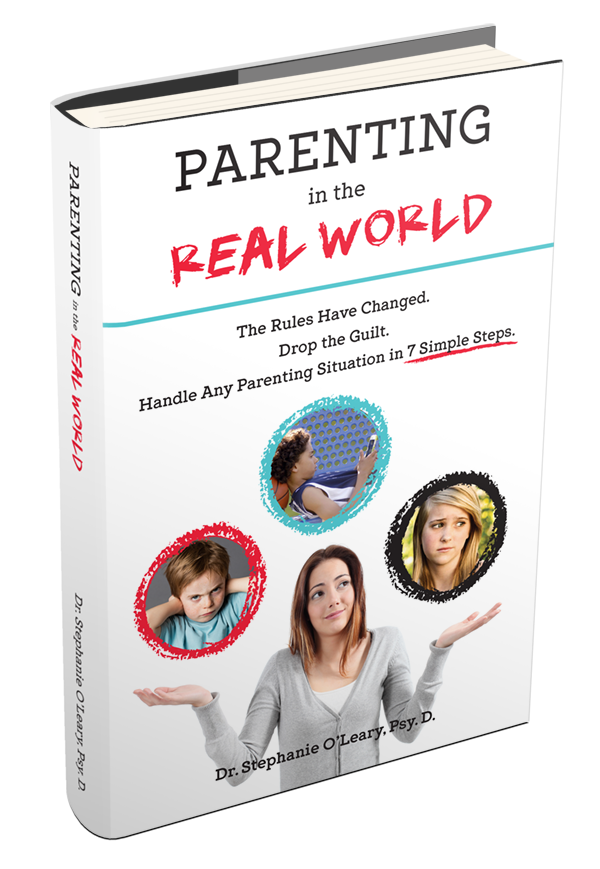
On Tuesday 2/14, my Valentine's Day gift to you is a FREE copy of "Parenting in the Real World" for your Kindle!

You love your kids. It goes without saying. When push comes to shove, you would do anything for your child and in a time of crisis you are undoubtedly your child’s hero, protector, and champion. As a parent, you show your love is many ways. Hugs and cuddles, clean socks in the drawer (possibly unmatched, but alas), and endless acts of coordination, strategic planning, chauffeuring, entertaining, consoling—the list goes on! You probably say, “I love you” to your child and I know you mean it. Your child knows you mean it. He or she knows that you love them. But how can you make sure your child really feels your love? Better yet, how can you do this on the days when your child is challenging, frustrating, and even obnoxious? In the spirit of Valentine’s Day, here are three foolproof ways to make sure your child feels your love no matter how much chaos and drama unfolds: Listen (even when you don’t want to hear it) I know there are times when you probably love chatting with your child. Let’s face it, there was a time when you hung on every new word and sound they made. But, in reality, there are also times when you truly aren’t interested, don’t want to have the same conversation again for the eighteenth time, or feel as if a specific discussion will certainly end up in a screaming match. Despite all of this, if you can set aside even five minutes a day to just listen to your child it will go a long way. Quick review; remember listening does not involve judgment, advice giving, or corrections. Set Limits I know this may be counter-intuitive since it seems like kids (from the time they can speak) want nothing more than to hear “yes” all the time and have no boundaries. In reality, setting limits sends your child the message that you care enough about them to say “no” even when it’s hard. I hear first-hand from teens who don’t have curfews the envy they have for peers whose parents go to the trouble of setting and enforcing limits. Sure, they get to stay out as late as they want, but they’d rather complain about their parents’ stupid rules and know, deep down, they’re loved. So, next time you set a limit or say no, remember it’s an act of love that your child will remember forever (even if they’re begging and pleading in the here-and-now). Take care of yourself! This is the absolute best way to make sure your child feels your love. Why? Because when your needs are met, even partially, you’ll have more to give to your kids. When you take time to recharge and replenish—to show yourself some love—the trickle-down effect is powerful! You’ll consistently make wiser parenting choices like biting your tongue instead of letting a zinger slip past your lips or taking a minute to listen and breathe before reacting (or over-reacting). These are the day-to-day events that truly define your relationship with your child and carry more weight than a quick hug or kiss on the cheek. All of these things add up and send a clear message to your child: I am loved. JOIN Dr. Stephanie for Facebook LIVE Monday 2/13 @ 9:00am CLICK the link. LIKE the page. Get parenting tips that work in the real world! 
|

Stephanie O'Leary, Psy.D.
Sharing practical strategies that help parents rediscover joy in their children (even when someone's crying, the phone is ringing, and it smells like the house may be burning down) Archives
October 2017
Categories |
 RSS Feed